Wednesday, March 7, 2012

Exercise of the Week

Pelvic Rotations – Leg Straight


Difficulty: Moderate

(Consult your chiropractor before starting this or any other exercise.)
Start: Lie down on back with legs straight, resting on floor. Place
arms out to side, palms up.

image


Exercise: Extend one leg straight up, feet pointing toward ceiling. Then, let leg roll all the way across body so that foot touches floor. Place hand on knee to keep it in that position.

image

Hold for 30-60 seconds, and then return to starting position. Switch sides, and repeat 2X per side

image

Sunday, March 4, 2012

What You Should Know About Concussions

The Center for Disease Control and Prevention reports 1.7 million people sustain a traumatic brain injury (TBI) each year, and the majority of these cases are classified as concussions (also know as mild traumatic brain injury) image
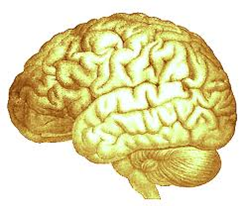
This health problem has risen in the public eye in the last year - the result of several professional athletes being affected by concussions. Recent research suggests we may be underestimating the impact of mild brain trauma on long-term neurological health.

A study published in the medical journal Brain indicates athletes who sustained concussions in early adulthood showed evidence of mental and physical deterioration 30 years after the event.

Impact to the head can cause the brain to move inside the skull, which can lead to bruising, blood vessel damage, swelling and bleeding – sometimes severe enough to require immediate medical intervention to prevent serious brain damage or death.
Sport concussions grab most of the media attention, but this type of brain injury can result from car accidents, workplace incidents, falls and fights.
To get familiar with concussions, here are the most common symptoms

• Headache
• Slurred speech
• Confusion
• Blurred vision
• Dizziness
• Light and noise sensitivity
• Nausea and vomiting
• Memory and concentration problems

If an injured person has symptoms that last beyond 15 minutes or loses consciousness, he or she should be evaluated by a physician.

Concussions: Get Serious!

Health researchers are pointing to evidence that reveals the public may not be taking concussions as seriously
as it should.
About half a million children visit hospital emergency departments annually for treatment of traumatic brain injury. The medical journal Pediatrics published a study that showed hospitalized children who were labeled as having a concussion spent fewer days in the hospital compared to children who were labeled as having mild traumatic brain injury – even though the labels mean the same thing.3 Another troubling statistic revealed high school football players were more likely to suffer concussions and severe head injuries compared to college
players. The American Journal of Sports Medicine published this
evidence, noting there were 0.67 injuries per 100,000 players at the high school level but only 0.21 per 100,000 players at the college level.4 One of the study authors suggested a possible reason could be that high schools do not usually have team physicians, unlike at the college level. This may result in improper
diagnosis and players returning to the field before they have adequately recovered from their injury.image

Football is not the only sport where concussions occur. An analysis of minor league hockey in Canada indicated there was a significant increase in head injuries, including concussions, among nine and ten year old players when hockey organizations
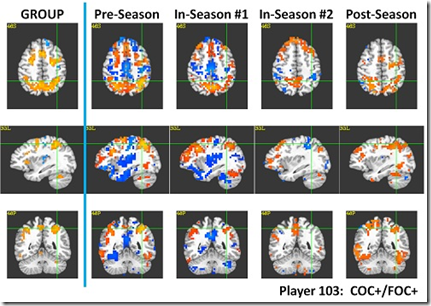
allowed body checking for this age group. In December of last year, the Radiological Society of North America presented interesting research on soccer players and brain trauma. The study looked at 38 amateur players who frequently hit the soccer ball (several times daily) with their head. They scored 20% lower in verbal memory and processing speed compared to players who rarely hit the ball with their head. Brain imaging scans of the
38 players revealed microscopic white matter, consistent with traumatic brain injury.

image
Currently, many athletes participate in baseline concussion tests that measure cognitive performance involving  memory, concentration and reaction time. If an athlete suffers a suspected
concussion, he retakes the test to see if any changes have occurred since the injury. However, health researchers at at Loyola University uncovered the possibility of high false negative tests, which could mean an athlete returns to
play prematurely.

Concussions and Chiropractic


One of the highest profile sport concussions cases is that of NHL superstar Sidney Crosby. After suffering concussions, Crosby had to endure an extensive break from playing hockey to rest and recuperate. While he was sidelined, Crosby received treatment from a team of chiropractic
neurologists. The therapy consisted of non-invasive, drug free rehabilitation that included adjustments and receptor-based stimulation of the senses, exercise and dietary changes to boost the function of the brain and nervous system.8 The treatment has helped many concussion sufferers to heal and recover more quickly from injury.
Your chiropractor wants you to take precautions to avoid concussions.
While engaged in sports, use proper equipment. Always wear a seatbelt when in a vehicle and familiarize yourself with the symptoms of a concussion. If you have any questions, talk to your chiropractor.
image

Image courtesy

Friday, February 24, 2012

Kids, Exercise & Academic Performance

If you want your child to do better in school, you should make sure your son or daughter gets plenty of exercise.
Research indicates physical activity can impact a child’s brain as much as the body. In a review of exercise studies published last month in the Archives of Pediatrics & Adolescent Medicine,
researchers uncovered compelling evidence in 12 studies that children who participated in regular physical exercise achieved better academic performance.

Exercise and the Brain

Why does exercise have a positive effect on the brain? Researchers offer a number of reasons.
Physical activity increases the amount of oxygen and blood to the brain, which in turn boosts cognitive function.
As well, exercise develops brain-derived neurotrophic factor
(BDNF) - a protein that exerts significant influence over the creation of neurons. BDNF is primarily found in brain areas important for learning, memory and higher thinking. Laboratory experiments showed mice that were exercised increased their production of BDNF considerably compared to sedentary mice. Exercise also increases production of mood-lifting endorphins and this may give kids the confidence to tackle academic
challenges.

image

Most experts agree additional human studies are needed on exercise and its impact on academic performance, but
so far the research shows promise.
A study on middle school kids revealed those students engaged in
vigorous exercise (20 minutes at least three days a week) achieved higher academic grades over two semesters
than students who did not participate in intense exercise.
Research published in the Journal of Sport & Exercise Psychology showed that elementary school children who had good aerobic fitness were more likely to excel in reading and mathematics.
However, strength training was not associated with improved academic performance. In their conclusion, the study researchers
remarked: “These findings suggest that fitness was positively associated with neuroelectric indices of attention and working memory, and response speed in children.

An analysis conducted on overweight children showed interesting results as it relates to executive function, which
influences a child’s ability to organize, plan, problem solve and concentrate.
Researchers split the children into two groups – one group did more weekly physical activity than the other. Children
who engaged in 40 minutes of activity each school day over 15 weeks scored better on executive function than kids who only did 20 minutes of exercise over the same period. When they reviewed brain scans for the most physically active group, the researchers found these kids had more neural
activity in the brain’s frontal lobe – a key area involved in executive function.
Many schools are already convinced of the influence of exercise on their students’ academic results. In an article that appeared in Education Week, a school district in Illinois developed a physical activity class for students struggling with reading and
writing. The students participated in early morning exercises followed immediately by a literacy support class. After just one semester, the students’ literacy development jumped 1.34
years in progress compared to 0.7 for students who only received literacy support. The school district expanded
the program to include mathematics, and the participating students saw their algebra scores improve 20.4%

image

Less Active Students – A Troubling Trend

Unfortunately, the focus for many schools is to reduce time spent on physical activities and concentrate more on academics. This seems counter-intuitive, especially when there has been such a rise in obesity among children and adolescents.image
Research indicates having additional physical activity in schools does not necessarily lower student academic performance. A review of scientific studies on this topic was published in the International Journal of Behavioral Nutrition and Physical Activity and the researchers remarked: “Given competent providers, PA (physical activity) can be added to the school curriculum by taking time from other subjects without risk of hindering student academic achievement. On the other hand, adding time to ‘academic’ or ‘curricular’ subjects by taking time
from physical education programs does not enhance grades in these subjects and may be detrimental to health.
Is your child getting enough exercise?
According to the Centers for Disease Control and Prevention, children and teens should get a minimum of 60 minutes of physical activity daily, and most of it should be aerobic.
Need advice on appropriate exercise for your child? Ask your chiropractor!

image

Tuesday, February 7, 2012

Exercise of the Week Pelvic Rotations – Knees Together


Difficulty: Easy
(Consult your chiropractor before starting this or any other exercise.)
Start: Lie down on back with legs bent to 90 degrees and feet on
floor. Place arms out to side, palms up.

image
Exercise: Bring knees together.image
Then, let legs roll all the way to side so that knee rests on floor.

image
Hold for 30-60 seconds, and then return to starting position. Switch sides, and repeat 2X per side.

Thursday, January 26, 2012

Exercise of the Week- Lumbar Stabilization (stage 3)


Plank Position


Difficulty: Moderate
(Consult your chiropractor before engaging this or any other exercise.)

image
Start: Lie down on stomach. Then, begin by propping upper
body up onto elbows/forearms, with hands together in prayer
position. Engage inner abdominal muscles by bringing belly button inward. Keeping spine steady, lift hips and knees so you’re resting on toes, creating a straight line from ankles to shoulders.

image
Exercise: Keeping spine steady, lift one leg 6-8 inches. Hold this position for 10-20 seconds. (Option 1)
If this is relatively easy, try bringing that leg horizontally out
to side as far as you can, keeping torso steady. Hold this position
for 10-20 seconds. (Option 2)

image
Switch legs, and repeat. Perform 3-5 sets of this exercise per side.
Be careful not to strain lower back.

Tuesday, January 24, 2012

Win Six 1-Hour Massages!

Refer-A-Friend Contest!

Starting 1/16/2012 thru 2/29/2012, get entered into a drawing to receive 6 free one hour massages just for referring a friend or family member to our practice.

image

The more people you refer, the better your odds!


Vancouver/ Portland area

360-882-7733

Monday, January 23, 2012

VACCINATIONS OR CHIROPRACTIC? WHICH ONE WILL YOU CHOOSE?

According to the germ theory of disease, humans get sick when they are exposed to pathogens like bacteria and viruses - especially if they are allowed to multiply uncontrollably inside them. Fortunately, we have an inborn self defense system to take care of this problem which we call the immune system. This system detects and destroys any foreign substances that
make their way inside the body, under the direction of the brain and the nervous system.
Whenever a person is weak or vulnerable such as the diseased or the very young or old, they are more susceptible to harboring infections, as their immune system also becomes weak. If these people get infected with bacteria or viruses, the results can be fatal.
clip_image002

HOW CAN WE HELP BOOST OUR IMMUNE SYSTEM?


Medical scientists have observed, once the human body has been exposed to a certain pathogen, it will be ‘primed’ to respond better to that same substance if it encounters it a second time. This is the principle that led to the development of vaccinations: when a person receives a vaccination shot, what they are actually getting is a small dose of the actual pathogen, or parts of its structure that our immune system will react to. Researchers theorize that if you get a small enough dose, you won’t get sick,
but afterwards your immune system will be more ‘ready’ to protect you if exposed to the same bug again later in life. Unfortunately, what researchers did not predict was the negative
side-effects of this well-intentioned preventative treatment.
First, people who are injected with vaccines can actually get sick from them! There is an entire website dedicated to the adverse effects related to vaccines - which receives approximately 30,000 submissions annually.1 Some of the more serious reports they receive include: allergic reactions, fevers, seizures, or even death. Second, there appears to be an increase in a number of other childhood diseases since the inception of national vaccination programs.
Reports have linked the use of mercury-laden vaccines with a significant increase in the number of neurodevelopmental disorders like autism. Other diseases, like ulcerative colitis and Crohn’s disease, typically uncommon in people less than ten years of age, appear to be substantially higher in children vaccinated for measles than in un-vaccinated children.  Even Sudden Infant Death Syndrome (SIDS), a devastating and mysterious condition resulting in millions of deaths in North America, has been associated with the DPT vaccination: in one alarming study, two-thirds of those infants who died
from SIDS had received their pertussis vaccine, with 26% dying within 3 days after their shots -and 13% within the first 24 hours!6
clip_image002[4]

Third, is it really effective? When we look at the death rates from many of the diseases that vaccinations have been developed for, we see that there was already a steady and significant decline
before the vaccination was introduced on a massive scale.  Also, when we compare numbers in the U.K. between certain diseases (measles) to others that have never been vaccinated for (scurvy), the steady decline is very similar, suggesting that vaccination is not the only reason for the eradication of these diseases,  and if an outbreak of measles occurs in highly vaccinated populations, those fully vaccinated children can still contract the disease!
In one recent report of an outbreak in the US, there were 9 laboratory confirmed cases of measles, out of which 7 were vaccinated previously for the disease.

clip_image002[6]


HOW CAN CHIROPRATIC HELP INSTEAD?


The immunity-boosting powers of chiropractic have often been demonstrated, with the most impressive of these documented by Walter Rhodes in his account of the influenza epidemic of 1918 in North America. According to the medical statistics from the era, many people who were treated by chiropractors fared much better than those treated by MDs with respect to the flu. In one impressive account, “In Davenport, Iowa, 50 medical doctors treated 4,953 cases, with 274 deaths. In the same city, 150
chiropractors including students and faculty of the Palmer School of Chiropractic treated 1,635 cases with only
one death.” Chiropractic is an all-natural health care solution that bases its entire philosophy on helping to improve the body’s innate ability to heal itself.
Chiropractors accomplish this feat by removing irritation and interference in the nervous system caused by vertebral
subluxations - thus allowing for proper regulation and control of all systems in the body, including the immune system.
Vaccinations - the benefits versus the risks - is a difficult subject faced by every parent. We recommend you do your own research, including a more thorough discussion about this topic with your Chiropractor, so that you get all the help you need to decide what is best for your child.